

Selma El Bassiri · Aman Nutrition Method
Return to your fitrah frequency.
Understand what shapes the way you eat, feel and care for your body. My work brings together nutrition, neuroscience and behaviour change within an Islam-centred approach to nourishment and everyday life.
For women who want to care for the body Allah (swt) entrusted to them, with understanding, intention and a sense of purpose.
What brings women here
Some of this may sound familiar.
Perhaps one of these, perhaps several. Each has its own reasons, and those reasons can be understood.
- Eating for comfort at the end of a day spent carrying pressure, yours and everyone else's.
- Advice about food, hormones and weight that contradicts itself from one post to the next.
- Changes that held for a few weeks, then became too hard to sustain.
- More of your attention going to monitoring, correcting and comparing your body than you would like.
- Very little room left for proper meals, rest or your own needs.
- A wish to understand how caring for your body belongs within a life centred on Allah (swt).
My perspective
Food is often where a much larger story becomes visible.
The pressure you carry. The rules you have learned about your body. The meals you miss. The comfort you seek at the end of a demanding day.
I work with the connections between those experiences and eating behaviour. Some of them are physiological: sleep, appetite, digestion, and what and when you eat. Some are learned. The brain learns through repetition and reward, so a response that once brought relief becomes the one it reaches for first. Usually both are at play, and both deserve attention.
Faith is part of that conversation: how we care for ourselves, what we give our attention to and what we want our health to make possible.
Caring for your body should give you more capacity to live.
More capacity to worship, think, create, care for others and pursue the work that matters to you. That is the purpose behind the attention we give to food, behaviour, rest and health.
I support women who want to lose weight, feel better and care for their appearance. I also question how much of a woman's life can become consumed by monitoring, correcting and comparing her body. My work holds both concerns together: meaningful care for the body, and a life with room for more than its appearance.
In Islam, the body is an amanah, a trust from Allah (swt). That is why caring for it deserves knowledge and intention, and why it is never the whole point.
The Aman Nutrition Method
Nourishment and behaviour change, in the same conversation.
Aman means safety and peace. The method looks at what the body needs, what keeps a pattern repeating and what makes change possible in the life a woman actually lives.
The intention is to build an approach to caring for yourself that you understand, can practise and can return to as life changes.
What the body needs
Nourishment that answers real physiological needs, with attention to appetite, sleep, digestion and energy.
What keeps a pattern repeating
Learned responses, emotional responses and beliefs about the body, and the way repetition makes them automatic.
What makes change possible
The conditions of your actual days: your responsibilities, your rest, the timing of meals and the rhythm of salah.
Your starting point
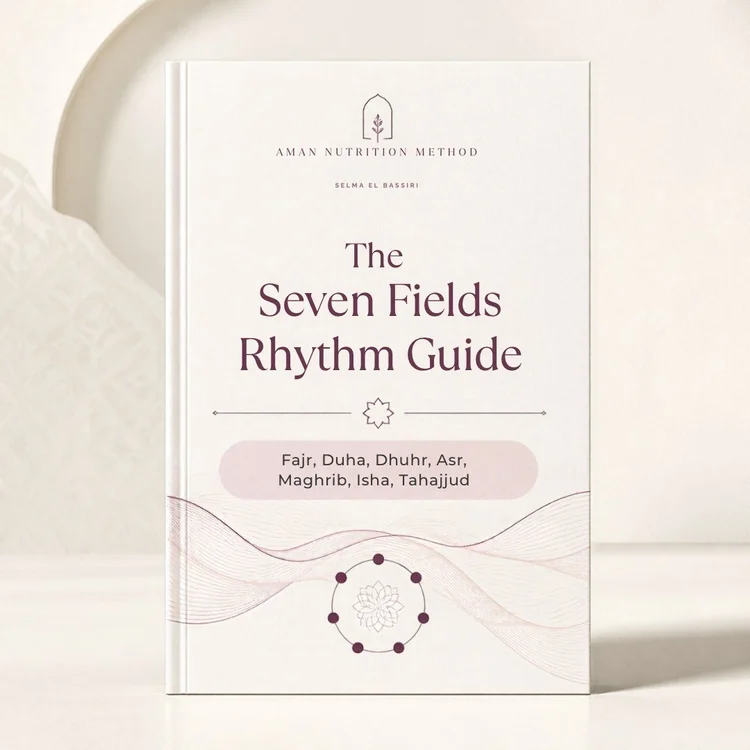
The Seven Fields Rhythm Guide
A moving map of your biology, anchored to the seven prayers.
Secure checkout on Stan. See all guides
Much of what drives your energy, appetite and sleep follows a daily clock, set mainly by light and by when you eat. Cortisol rises to wake you. Your body handles sugar best earlier in the day. Melatonin begins to rise in the evening.
The Seven Fields is my framework for working with that clock. The five daily prayers, with Duha and Tahajjud, become seven anchors across the day and night. Each one opens a field with its own guidance for light, food, movement, focus and rest. Because the fields begin with your local prayer times, the map moves with your location and the seasons.
- How light and meal timing set your body's clocks, with diagrams that make the connections clear.
- Eight hormones and messengers behind energy, appetite, focus and repair, and how they shift from Tahajjud to Isha.
- Why salah sits between the fields, and what research has measured in the brain and heart during sujood.
- Each field in practice, with one high-yield shift to start with and what to notice afterwards.
- Your whole day on one page, plus five foundations to hold on to when a day falls apart.
- When life doesn't follow the map: your period, Ramadan, travel, stressful days, and long summer or winter days.
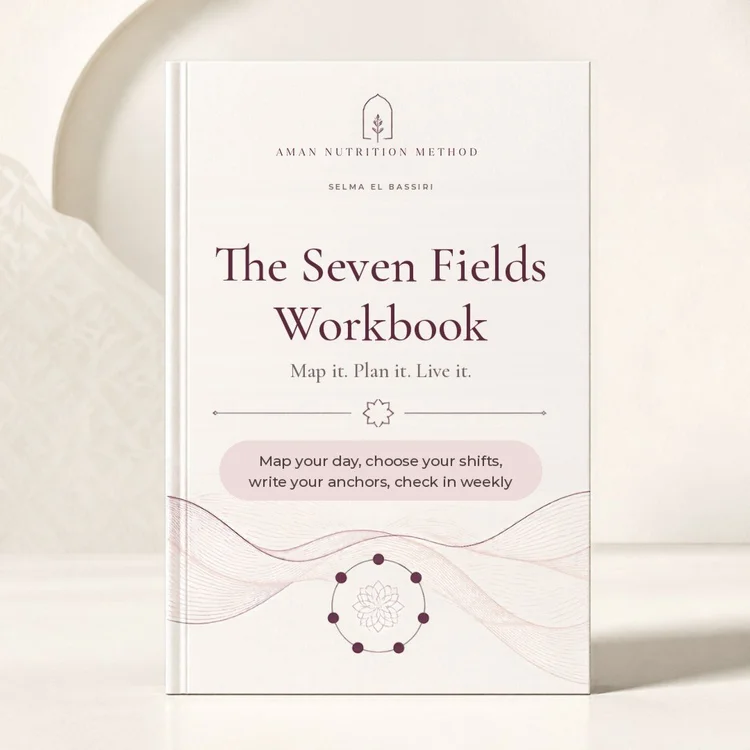
- A printable workbook to map your current day, find where it breaks down and choose your first shifts.
Doors opening soon
Fitrah Nourishment
My upcoming course on food itself: what the body needs from a meal, and how foods named in the Quran and Sunnah, such as dates, olives, figs, honey and barley, can be understood through biology and cellular nutrition.
Join the waitlist and you will be the first to hear when enrolment opens.
Meet Selma
From audit and risk to food behaviour.
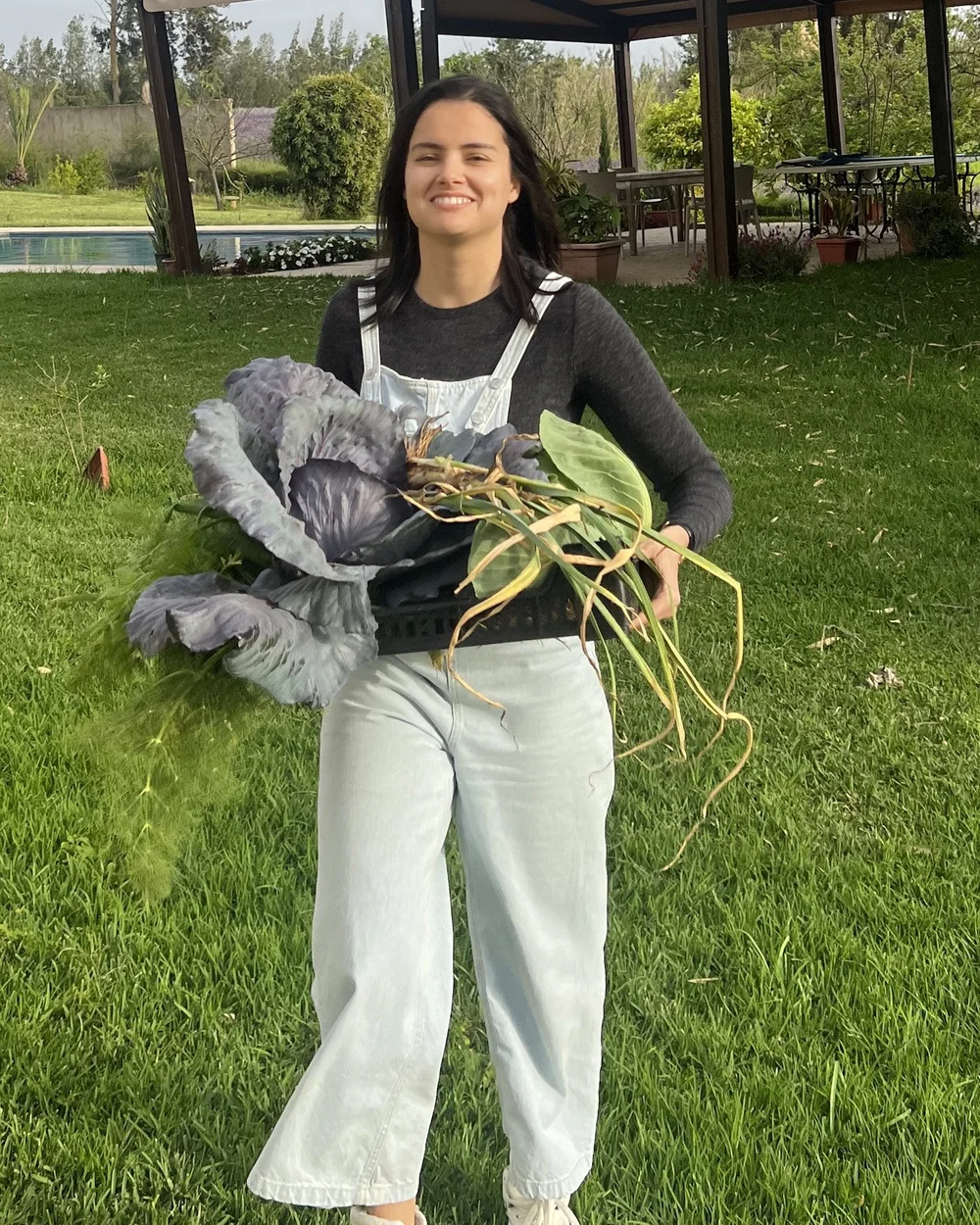
I'm Selma El Bassiri, a food behaviour expert and founder of the Aman Nutrition Method. Before this work, I trained in corporate finance and worked in Big Four audit and risk consulting in Paris. That background gave me the habit of looking past an isolated problem to the conditions and patterns around it.
Today I bring that analytical perspective to the way women eat, relate to their bodies and approach change. I'm French-Moroccan, based in Casablanca, and a mother.
Where to begin
Start with the shape of your day.
The Seven Fields Rhythm Guide uses the prayer times as anchors for a practical map of light, meals, movement and rest. Read it once, choose one field, and begin there.